
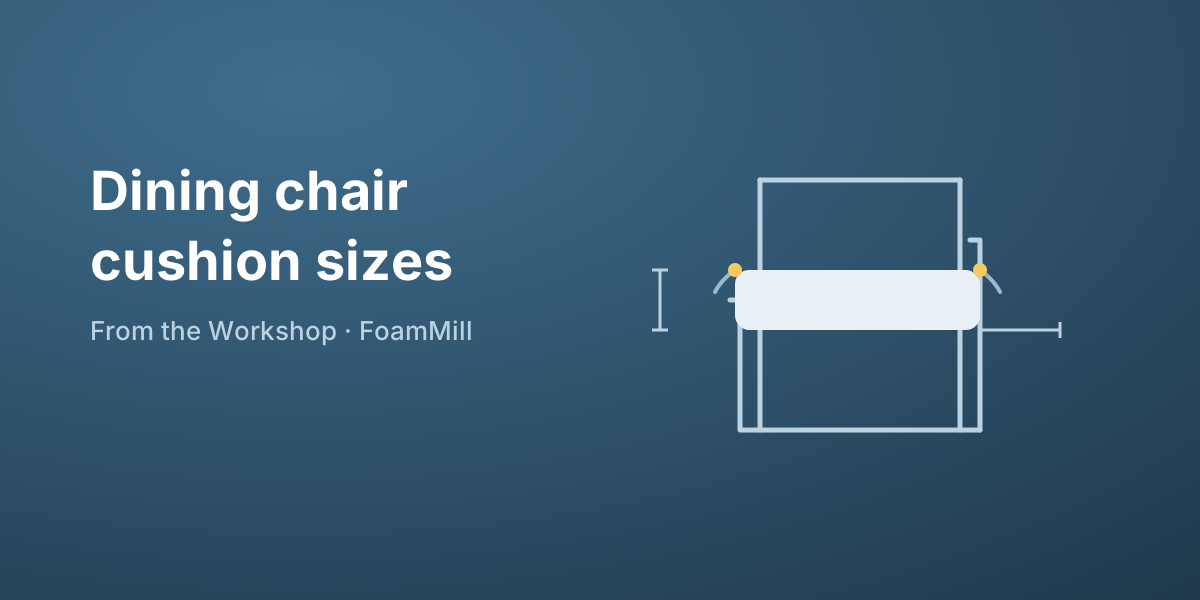
Walk down the housewares aisle and every dining chair pad says 16 by 16 inches, as if chairs agreed on something. They did not. Dining seat widths in real American homes run anywhere from 14 to 20 inches, seats are trapezoid more often than square, front corners are rounded, and ladder-back chairs have notched rear rails. That is why stock pads either drown the seat or leave the wood showing at one corner. The good news: a dining chair seat is the fastest cushion in the house to measure, and a custom cut to your actual numbers costs little more than the aisle version.
Measure the seat, not the old pad
The pad currently on the chair is compressed, rounded at the corners and possibly the wrong size to begin with. Measure the seat itself: width across the front edge (dining seats are wider at the front), depth along the centerline from front edge to the back rail, and note any narrowing at the back — plenty of dining seats are trapezoids with the rear edge an inch or two narrower. Work to the quarter inch and write the numbers down. The measuring guide covers the method in detail, including the saddle-shaped seats common on mid-century chairs, where the center dips and the flat perimeter is what you measure.
One more habit worth adopting: measure two chairs, not one. Even chairs from the same set vary by a quarter inch after decades of use, and the smaller number is the one to order.
The thickness question: thin wins at the table
Dining is a task, not a lounge. A seat pad of 2 to 2.5 inches in firm foam takes the edge off a hard wooden seat without turning dinner into a balancing act. Go thicker and two things go wrong: your knees rise toward the table apron (the board under the tabletop that your legs are supposed to fit under), and your elbows end up below the plate, which is exactly as awkward as it sounds.
The apron is the real constraint people forget: measure the clearance between the seat surface and the underside of the apron, and keep the total seated rise within it. On chairs with low aprons, a 2-inch pad is not a compromise — it is the maximum that works.
Shape details that stock pads can't do
- Rounded front corners: nearly every dining seat has them; stock pads have sharp corners that overhang and catch hips.
- Notched backs: ladder-back and slat-back chairs have rear rails with cutouts; a cut pad can follow the notch exactly.
- Trapezoid seats: rear-narrowed seats need a trapezoid pad, not a rectangle pushed into a gap.
- Saddle seats (dipped centers): order flat at the perimeter dimensions and keep the thickness at the low end of the range — the dip is where you sit, and it still works.
Attachment: two rear ties, done properly
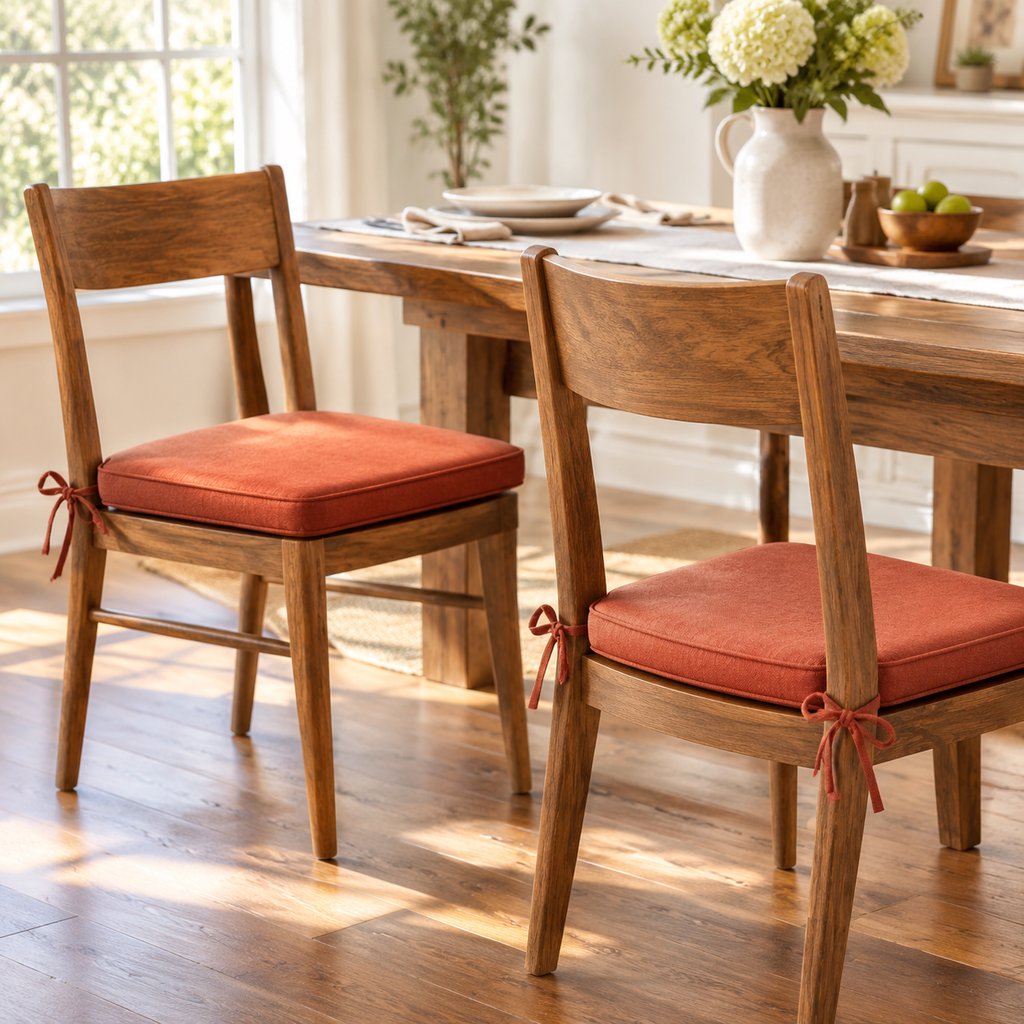
Dining chairs take rear ties — two is standard, tied to the back legs or rear rails. Front ties on dining chairs catch crumbs and dampen in the dishwater zone; skip them. The anti-slide guide covers the full attachment toolbox, but on dining chairs the case is simple: rear ties stop the pad shooting backward on push-off, which is the only direction a dining pad actually travels.
Covers for a table that gets used
Dining pads live in the spill zone, so plan for laundry from the start. A removable zippered cover in a mid-weight woven fabric — cotton blend, linen mix, or a performance weave — goes in the wash after the pasta night; embroidered velvets do not. Darker and mid-tone colors hide the daily grime between washes better than bone white, and a fabric with some texture holds its look longer than flat weaves, which show every compression mark. If the pads live at a family table with small children, treat washability as the first filter, not the last.
Backrest pads: a quieter upgrade
Ladder-back and Mission-style chairs take a thin backrest pad — 1.5 to 2 inches, cut to the inside width between the uprights and tied top and bottom. It turns a beautiful-but-brutal chair into something guests sit in through dessert, and because it carries no seat load it can run one grade softer than the seat pad.
When you have the numbers, the dining chair pad configurator prices your exact shape — rounded corners, notches and trapezoids included — and the dining chair cushion page shows the fabric and foam combinations that hold up to daily meals. Measure once, order for the set, and the kitchen chairs stop being the reason everyone migrates to the couch.