
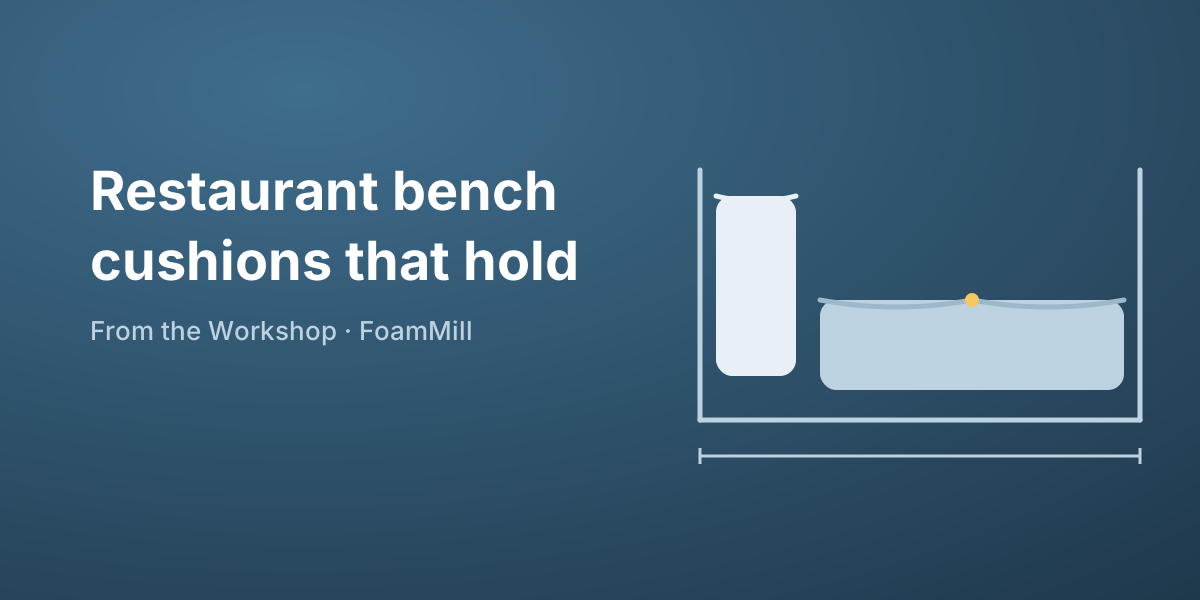
A busy dining room is the harshest environment a cushion will ever work in. A single popular banquette seat takes more sittings in one weekend than a home sofa takes in a year, plus nightly wipe-downs, steam cleaning, jeans with keys in the pocket, and the occasional tray of hot plates sliding across the edge. Cushions made to living-room standards fail in a restaurant within months — sagging down the middle, seams popping at the corners, covers shining where they should be textured. Commercial bench cushions are built differently from the foam out, and the differences are specific enough to shop for.
Volume changes the math
Foam fatigue is cumulative: every compression cycle spends a little of the cell structure. A home cushion might see ten sittings a day; a busy two-top can cycle through dozens before last call. Wear also concentrates rather than spreading evenly — the front third of the seat, where guests slide in and out, and the corners, where traffic brushes past, go first. That is why the first spec to fix is density, not color or price. High-resilience grades in the HR45 class are the working minimum for full-service dining — they cost more per cushion and repay it by lasting years instead of seasons. The guide we use for choosing foam grades applies double here, because the cushion will never get a day off.
Firmness: guests are there to eat, not lounge
Dining seats should sit on the firm side. Guests perch, lean forward over the table, get up and return repeatedly; a plush seat that swallows them reads as slow service and makes getting in and out awkward. Firmness also degrades fastest in the first weeks of hard use, so a cushion that arrives medium-firm settles to medium — right where a dining room wants it. Seats in the 2.5–3 inch range at a firm grade hold the line; back cushions along the banquette can go one grade softer and 3–4 inches thick, because they give rather than carry.
Fabric: color through, cleanable, seams that hold
Commercial upholstery lives on three properties. First, color through the fiber — solution-dyed acrylics keep their tone through years of UV from windows and, more importantly, through bleach-based cleaning. Second, cleanability: performance weaves and vinyls rated for repeated disinfecting, because sanitizing is nightly. Third, seam construction: double-stitched seams and quality zippers, because the fabric rarely fails before the stitching does. Piping looks sharp but put it where hands and trays won't grind it — top of back cushions yes, front edge of seats optional.
Details that keep cushions in place
- Attachment: loose cushions migrate. Ties, hook-and-loop, or mounting brackets against the wall keep the line straight through a double shift.
- Corner treatment: boxed corners with reinforced stitching outlast gathered corners wherever traffic brushes past.
- Fire regulations: commercial upholstered furniture must meet flammability requirements that vary by state — California's TB 117-2013 is the common reference. Confirm what your jurisdiction expects before ordering; compliant foams are standard stock, not a special request.
- Removable covers: zippered covers let you deep-clean or recover without replacing the foam — the foam is the expensive part and rarely the first thing to look tired.
One long run, or split sections?
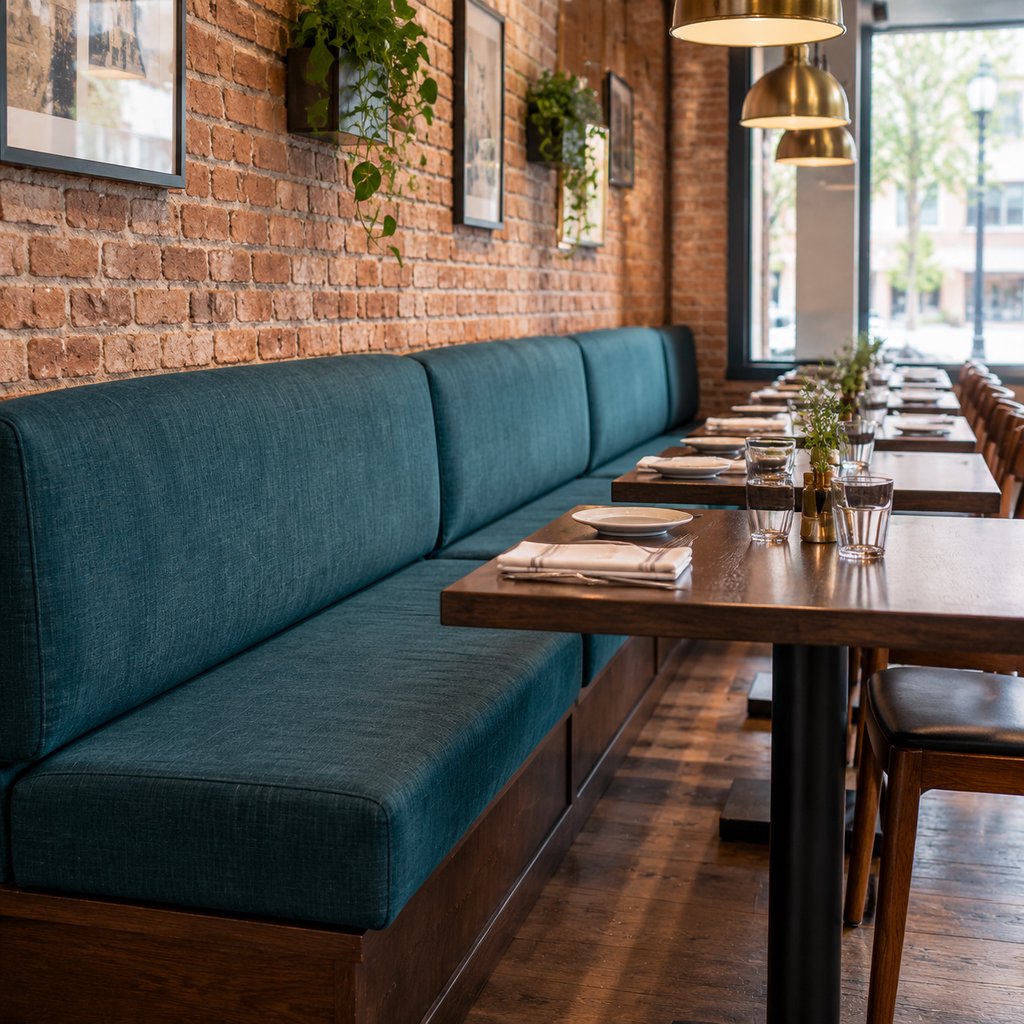
Long banquette runs can be cushioned as single long pieces or split into sections. Single pieces look seamless and stay aligned; splits are easier to flip, deep-clean and replace one at a time when one spot takes disproportionate punishment (the corner table always does). Either way, the run is only as good as its measurements — wall-mounted banquettes are never perfectly straight, and stock-size cushions telegraph every gap. Measure each straight run edge to edge and work to the quarter inch; our bench cushion guide covers thickness by seat type, and L-shaped corners price as single cuts.
Lifespan and the replacement plan
Built to these specs, commercial bench cushions reliably deliver five years and more of service, with the back cushions outlasting the seats. Plan the inevitable: keep the measurements on file (they don't change when the foam does), and order replacements for the worn sections without re-measuring the room. When you are ready to spec a run, the banquette cushion configurator prices your exact dimensions instantly, and the commercial cushions page covers the materials we cut for restaurants, cafés and hotel seating every week.