

Memory foam, high-resilience polyurethane, and latex are the three fills that dominate custom cushions, and each one feels wonderful for the first week. Where they separate is in how they age, how they handle temperature, and what they cost to replace — three things no showroom will show you. There is no universally best foam; there is a best foam per job, and the choice gets a lot easier once you know what each material is actually doing under you.
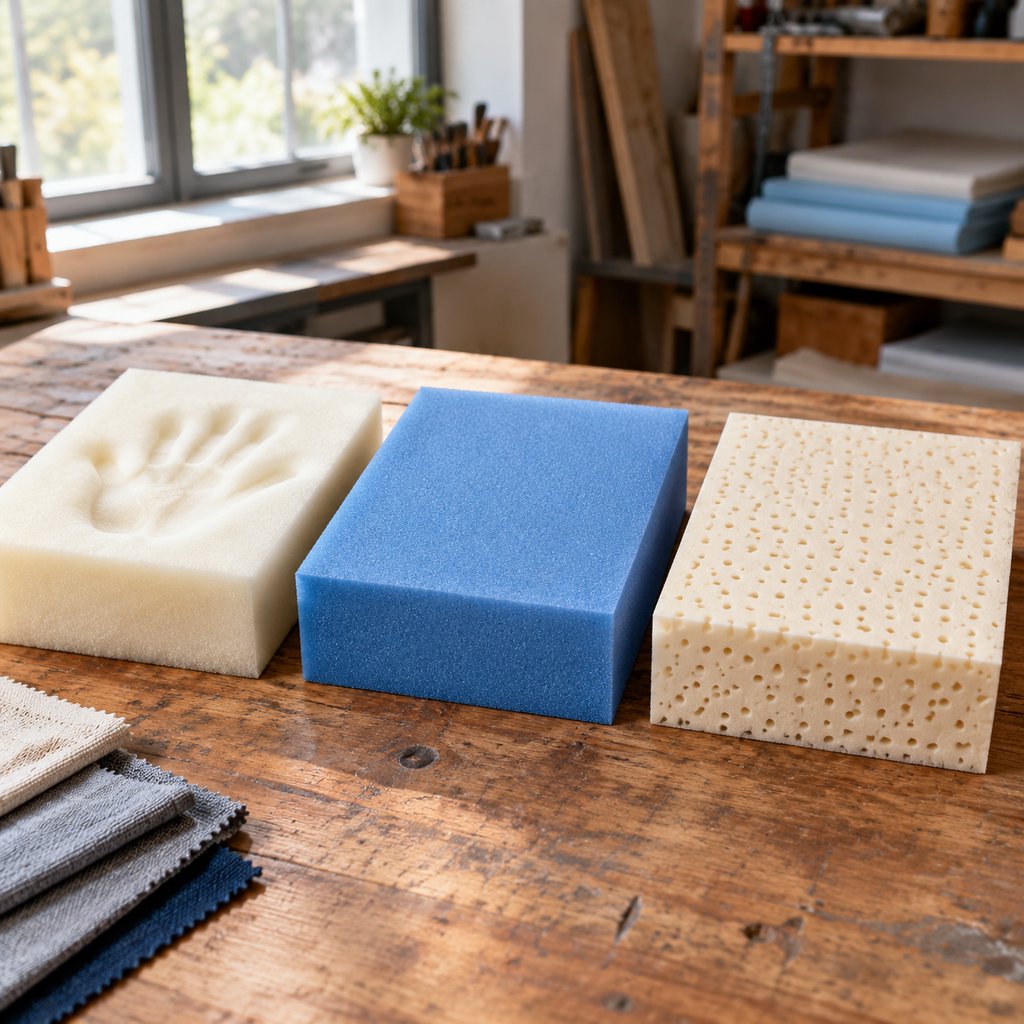
Memory foam: comfort that takes its time
Memory foam is viscoelastic polyurethane — it softens with heat and weight, molds to whatever is pressing into it, and recovers slowly when the pressure leaves. Press your hand in and the impression lingers for seconds. That slow, body-conforming quality is why it earns its reputation in mattress toppers and pressure-relief layers: it spreads load instead of pushing back against it.
Its weaknesses are the mirror image of its strengths. It runs warm (dense and slow-moving air traps heat), it stiffens noticeably in a cold room or an unheated RV, and it ages by softening — a memory layer that started at a firmness grade feels conspicuously lazier a few years in. It is also the heaviest of the three per cubic foot. Our take: memory foam rarely makes a great whole cushion, but a 2–3 inch memory layer over a supportive core is a legitimate comfort upgrade for window seats and reading nooks.
High-resilience (HR): the workhorse
High-resilience foam is advanced polyurethane engineered for fast recovery and long cell life. Press it and it springs back instantly, every time, for years — the feel stays consistent from month one to year five, which is exactly what a seat cushion owes the people using it daily. Grades like HD36 and HR45 (the number is density in kilograms per cubic meter, as explained in our density versus firmness guide) hold their support through family traffic, restaurant shifts and daily RV use.
HR foam has no romance. It is not a treat the way memory foam is, and it does not have a story the way natural latex does. What it has is the best support-per-dollar in the industry and the most predictable aging curve, which is why it is our default for sofa seats, bench cushions, dining pads and back cushions — the cushions people actually sit on every day.
Latex: the long-haul option
Latex — natural, blended or synthetic — is the odd one out in feel: buoyant instead of contouring. Push into it and it pushes back immediately and evenly; there is no molding, no slow sink, no heat hug. Its cell structure is open and aerated (look at the pinholes in real latex), so it runs cooler than memory foam and shrugs off moisture better.
Its two costs are literal: price and weight. Latex is the most expensive fill per cushion and the heaviest to ship and handle. What it buys in return is the longest service life of the three — latex cushions are the ones that outlive the frame they sit on — plus natural latex's resistance to dust mites and microbial growth. It earns its price on full-time RV mattresses, boat berths and any place where replacing foam is a genuine project rather than a zipper opening.
The three numbers that actually decide it
- Recovery speed: memory foam seconds, HR fractions of a second, latex instant. Recovery speed is comfort language — it is what your body reads as "soft," "supportive," or "lively."
- Aging curve: memory foam softens and slows with every month of use; HR holds its grade for years then fades slowly; latex fades the least and the latest.
- Temperature behavior: memory foam is heat-activated (firmer when cold), latex breathes (cooler), HR sits neutral. Unheated spaces and hot climates care about this more than people expect.
Which fill for which job
- Everyday sofa and deep-seat cushions: HR, medium-firm. This is the no-drama default that keeps its shape.
- Window seats and reading nooks: HR core with an optional memory layer — support below, pressure relief above.
- RV and boat mattresses: HR base or full latex; wet cockpits additionally want quick-dry construction, as covered in our marine cushions guide.
- Bench and dining pads: firm HR at 2.5–3 inches — nobody lingers long enough to need contouring.
- Memory foam alone as a cushion: skip it. Without a supportive base underneath it bottoms out and turns sluggish.
The pro move: stop choosing, start layering
Most of the best custom builds we ship are hybrids: an HR core doing the structural work, with a memory or latex layer doing the finishing. The base determines whether the cushion holds you at the right height for years; the top layer tunes the first five seconds. Thickness, grade and layering are all configurable per cushion in the cushion configurator, and the foam selection guide maps each grade to applications if you want the full chart before ordering.