
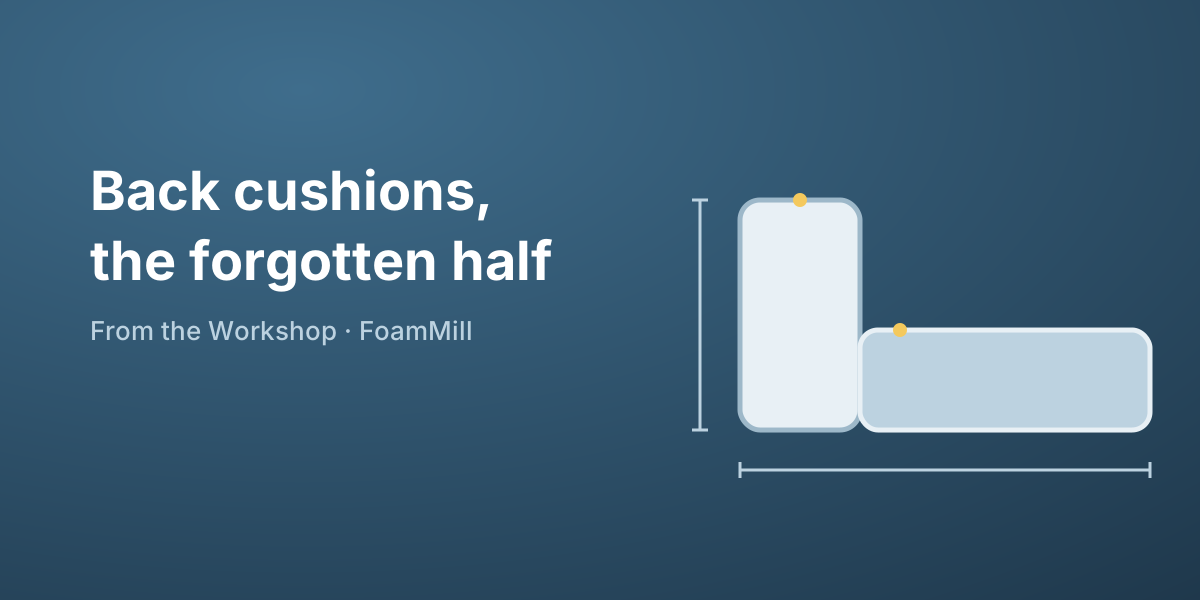
When a sofa stops being comfortable, everyone blames the seat cushions — and often they are right. But there is a quieter failure happening behind them: back cushions lose their shape years before seats do, because every lean, every nap, every night someone sleeps on the sofa works on the back first. The result is the sofa you know too well — firm new seats in front, pancaked backs against the wall, and a body that slides into a C-shape every evening. Replacing back cushions properly turns that around, and it has its own rules, different from seat cushion rules.
What a back cushion is actually for
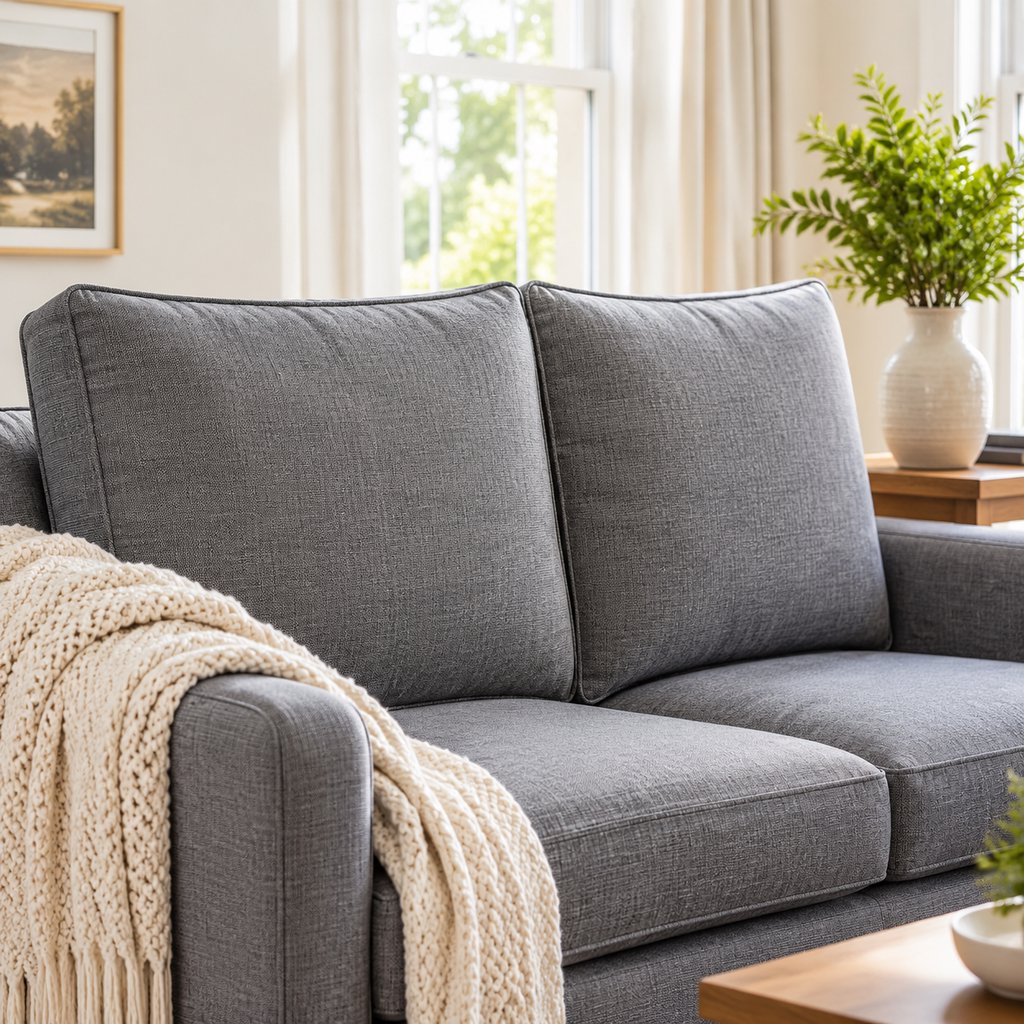
The seat holds your weight; the back holds your posture. A working back cushion pushes gently into the mid-back — roughly between the shoulder blades and just above the lumbar region — so the spine keeps its natural S-curve instead of collapsing into a slouch. When back cushions flatten, sitters sink four or five inches behind the seat plane, the lumbar support disappears entirely, and no amount of seat foam fixes the feeling, because the missing support is behind you.
This is why replacing seats and reusing the old backs is a half-fix. New seats raise the sitting position, which pushes you harder into tired backs and makes the sag more obvious.
Why backs die first
Three reasons, all mechanical. Load direction: a back cushion is leaned on for hours at a shallow angle, the exact loading that slowly collapses foam cells and drives loose fill to the bottom corners. Construction: many factory backs are loosely overfilled fiber pillows — soft and inviting on day one, lumpy and hollow by year two, because fiber has no structure and migrates with every squish. Neglect in ordering: when people finally order replacements, they measure the seats and forget the backs entirely. Furniture showrooms know all this — it is why the display models always have extra throw pillows propped over the flattened backs.
Foam or fiber — and the honest answer is usually foam
Back cushions have a traditional look built on fiber-filled pillows: light, cushy, endlessly fluffable. The fluffing is the tell — a fiber back needs constant attention to look like anything, and gravity always wins. A cut foam back cushion, one grade softer than the seats, keeps a crisp profile with zero maintenance: it stands upright on its own, fills the space between the arms wall to wall, and gives consistently. For the firmness ladder, see our density and firmness guide — the same grades apply, just used one step softer.
People who love the memory-foam feel can add a thin memory layer to the front face of a back cushion; the logic is the same support-below, comfort-above layering described in our foam comparison. What to avoid is all-memory backs: memory foam is heat-activated and heavy, and in a vertical application it slowly slumps downward over months.
The measurements that matter
Back cushions are measured inside the sofa, not by the old cushion: width from inner arm to inner arm at the back cushion's height (arms taper — check the width at the top as well as at the seat), depth from the back rail to where the seat cushion's back edge sits when someone is seated, and thickness, which for foam backs runs 4 to 6 inches depending on how deep the sofa is. The full method, including T-cushion complications, is in the sofa cushion measuring guide — the numbers transfer directly, just taken at the back plane instead of the seat.
One grade softer, not two
The most common mistake in DIY back cushion specs is overcorrecting: seats were too firm, so the backs get ordered marshmallow-soft. A back that yields too easily pushes you through to the hard seat frame behind it and delivers no support at all — softness at the expense of support is just a slower slide into the same slouch. One grade below the seat is the target; the back should give when you lean, then hold.
When you have the width, depth and thickness, the chair back cushion configurator prices the exact cut in your chosen grade, and the sofa cushions category covers the seats to match — order both at once and the whole sofa reads new, not just the part you sit on.